Early Life and Education
César Pelli was born on October 12, 1926, in San Miguel de Tucumán, Argentina, a provincial city nestled at the foot of the Andes. From an early age, Pelli displayed a fascination with buildings and their ability to shape the character of a place. He studied architecture at the Universidad Nacional de Tucumán, graduating in 1949 with a degree that reflected the European-influenced architectural education prevalent in Argentina at the time.
In 1952, seeking broader opportunities and exposure to the cutting edge of architectural thought, Pelli emigrated to the United States. He enrolled at the University of Illinois at Urbana-Champaign, earning a Master of Science in Architecture. This move would prove transformative — not just for Pelli's career, but ultimately for the skyline of Kuala Lumpur and the identity of a nation.
Career Before the Petronas Towers
Pelli's early career in America was distinguished by his association with some of the era's most important architects. He joined the office of Eero Saarinen, one of the most influential architects of the mid-20th century, working on landmark projects including the TWA Flight Center at JFK Airport. After Saarinen's death, Pelli continued to develop his design philosophy at DMJM and later as partner at Gruen Associates.
In 1977, Pelli took a dual step that would define the rest of his career: he accepted the position of Dean of the Yale School of Architecture and founded his own firm, Cesar Pelli & Associates, in New Haven, Connecticut. As dean, he revitalized Yale's architecture program, while his firm quickly earned commissions for major projects. Notable early works included the Pacific Design Center in Los Angeles, the World Financial Center in New York City (now Brookfield Place), and the expansion of the Museum of Modern Art.
By the early 1990s, Pelli had established himself as one of the world's preeminent architects. In 1991, the American Institute of Architects named him one of the ten most influential living American architects — a recognition that perfectly positioned him for the commission that would become his magnum opus.
Designing the Petronas Twin Towers
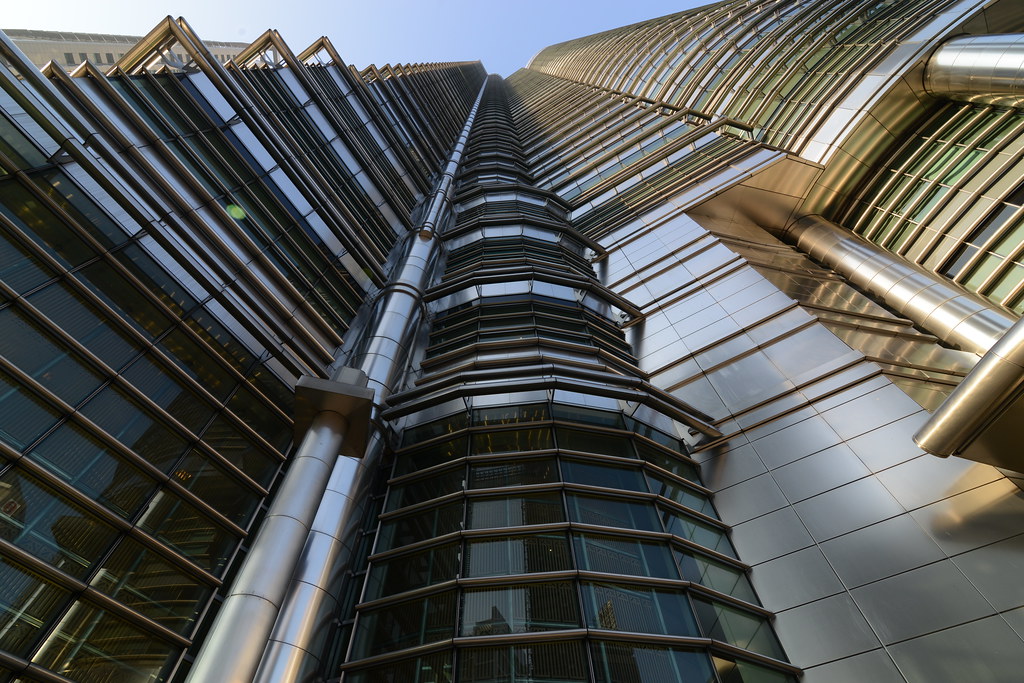
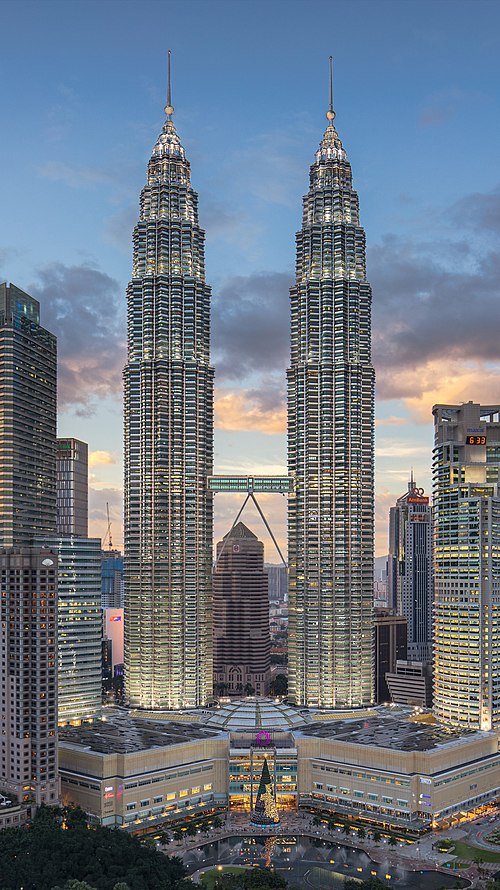
When Pelli received the brief for the Petronas Twin Towers competition in 1991, he recognized an extraordinary opportunity: to create a building that would not merely be tall, but culturally meaningful. Rather than applying a generic international style, Pelli immersed himself in the study of Islamic art and geometry, seeking forms that would resonate with Malaysia's predominantly Muslim population while projecting a modern, forward-looking image.
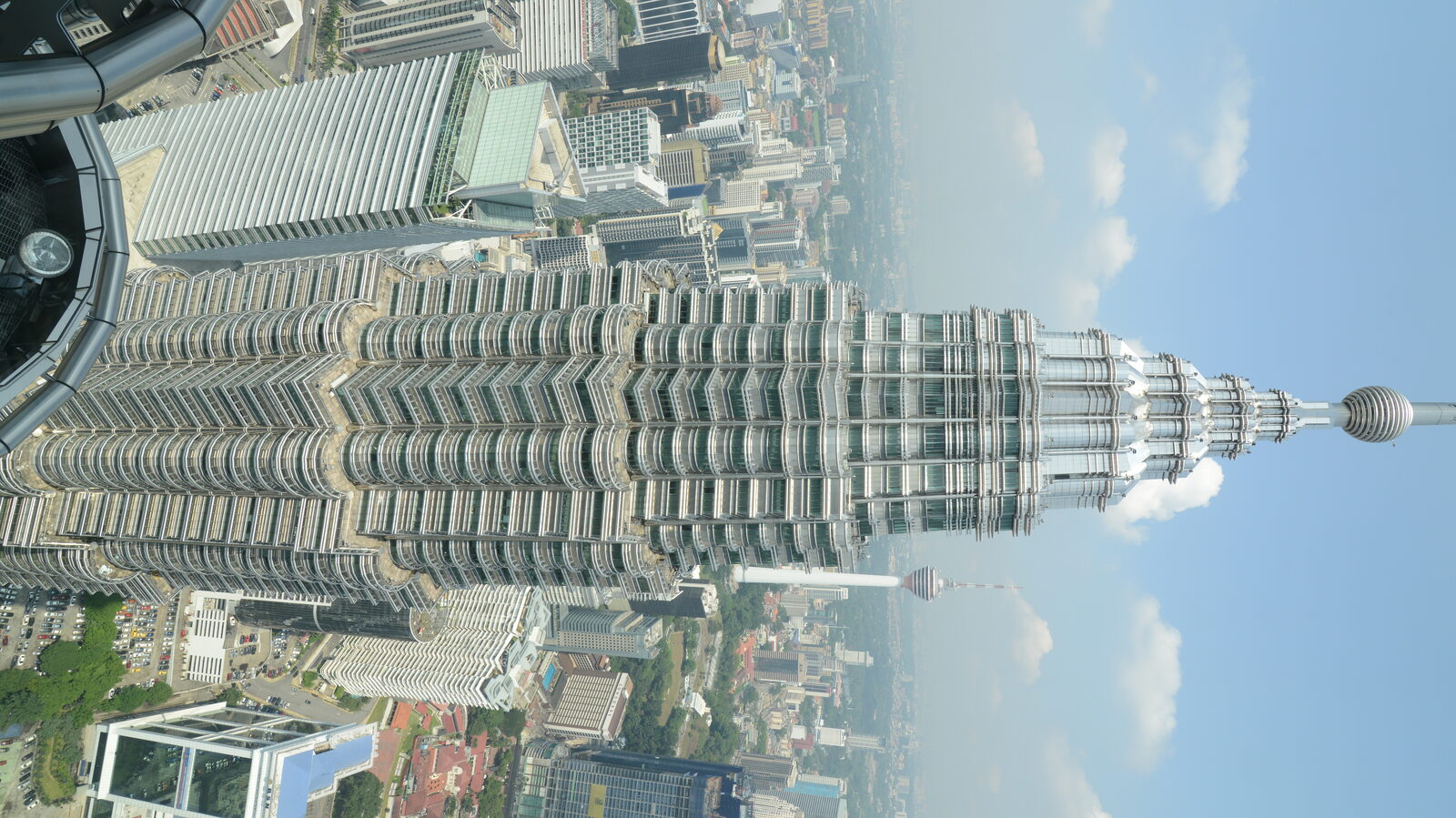
His breakthrough came with the adoption of the Rub el Hizb — an eight-pointed star formed by two overlapping squares — as the basis for the floor plan. This Islamic symbol, representing unity and harmony, provided a geometric foundation that was both culturally significant and architecturally functional. Pelli refined the form by adding circular segments between the star's points, creating lobed floor plates that maximized usable office space.
The decision to design twin towers rather than a single structure was equally inspired. The symmetry of the design created a visual dialogue between the two structures, with the connecting skybridge serving as a unifying element. The result was a composition of extraordinary elegance — two towers that seemed to reach for the sky while remaining grounded in cultural tradition.
Design Philosophy
Pelli's approach to architecture was characterised by what he called "contextual modernism" — a belief that buildings should respond to their specific cultural, climatic, and urban context rather than adhering to a universal style. This philosophy was evident throughout his career but reached its fullest expression in the Petronas Towers.
He believed that the best buildings are those that enhance their surroundings and speak to the aspirations of the people they serve. For Pelli, the Petronas Towers were not merely an exercise in structural engineering but a cultural project — an attempt to give physical form to Malaysia's national identity and ambitions.
Later Career and Legacy
After the Petronas Towers, Pelli continued to design significant buildings worldwide, including the International Finance Centre in Hong Kong, the Costanera Center in Santiago, and numerous cultural institutions. His firm, renamed Pelli Clarke Pelli Architects (and later Pelli Clarke & Partners), maintained its position among the world's leading architectural practices.
Pelli received the AIA Gold Medal in 1995, the highest honour the American Institute of Architects bestows on an individual. He also received numerous international awards and honorary degrees.
César Pelli passed away on July 19, 2019, at the age of 92. His obituaries universally cited the Petronas Twin Towers as his greatest achievement — a building that had transcended architecture to become a symbol of national identity, cultural pride, and the boundless possibilities of human creativity.