The Supertall League
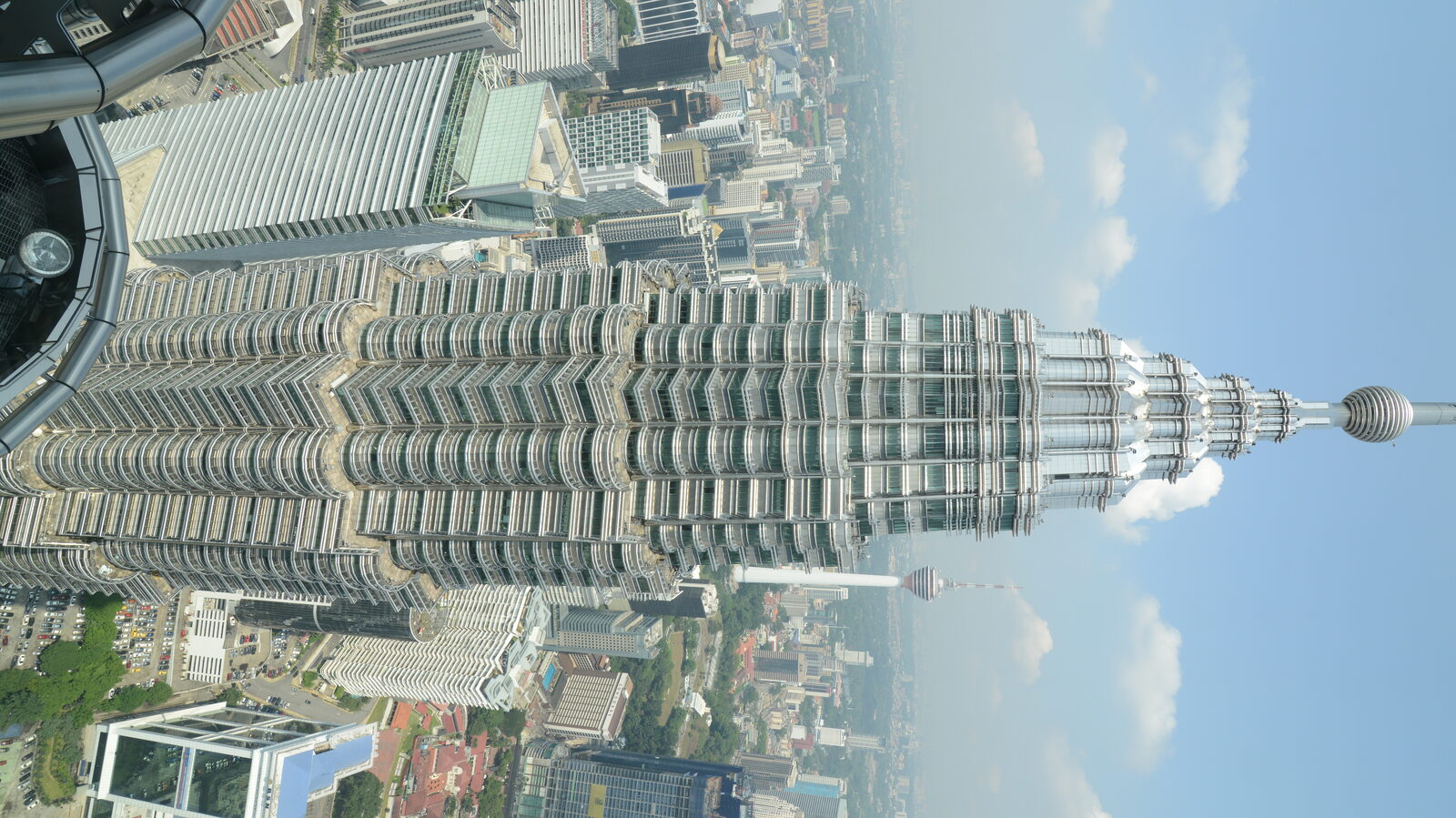
When the Petronas Twin Towers claimed the title of world's tallest building in 1998, they entered an elite category of structures that push the boundaries of architectural and engineering possibility. While they no longer hold the overall height record, they remain unique among the world's supertall buildings for their twin-tower design and Islamic architectural heritage.
Height Comparison
World's Tallest Buildings (as of 2024)
What Makes Petronas Unique
While the Petronas Twin Towers rank lower in absolute height than many newer buildings, several features make them genuinely unique in the world of supertall architecture:
Twin Tower Design: The Petronas Towers remain the world's tallest twin skyscrapers — no other twin-tower project has come close to matching their height. The symmetry and visual dialogue between the two towers creates an architectural effect that single-tower buildings cannot achieve.
Concrete Construction: Unlike most supertall buildings, which use steel frames, the Petronas Towers are built primarily from high-strength reinforced concrete. This material choice, unusual for a building of this height at the time, demonstrated that concrete could be used for supertall construction and influenced subsequent building designs across Asia.
Cultural Design: While most supertall buildings adopt a universal international style, the Petronas Towers are rooted in Islamic geometric principles. The eight-pointed star floor plan and Islamic facade patterns make them one of the few supertall buildings with a strong cultural identity.
The Skybridge: The double-decker skybridge connecting the towers at the 41st floor is a unique engineering feature that no other twin-tower design has replicated at this scale.
The Height Controversy
When the Petronas Towers claimed the world's tallest building title in 1998, it was not without controversy. The towers' height of 451.9 metres includes the decorative steel pinnacles atop each tower. Chicago's Sears Tower (now Willis Tower), at 442 metres to its roof (527 metres including its antenna), argued that functional height should determine the record.
The Council on Tall Buildings and Urban Habitat (CTBUH), the international body that arbitrates height records, eventually established four categories of building height measurement: height to structural or architectural top, height to highest occupied floor, height to roof, and height to tip of antenna. Under the most commonly cited criterion — height to architectural top — the Petronas Towers won the record fairly.
Legacy in Context
Despite being surpassed in height, the Petronas Twin Towers maintain a cultural and architectural significance that many taller buildings have not achieved. The Burj Khalifa may be taller, but the Petronas Towers are arguably more culturally meaningful — they represent not just engineering prowess but a national identity, a cultural heritage, and a specific moment in a country's transformation.