A Vision Born of National Ambition
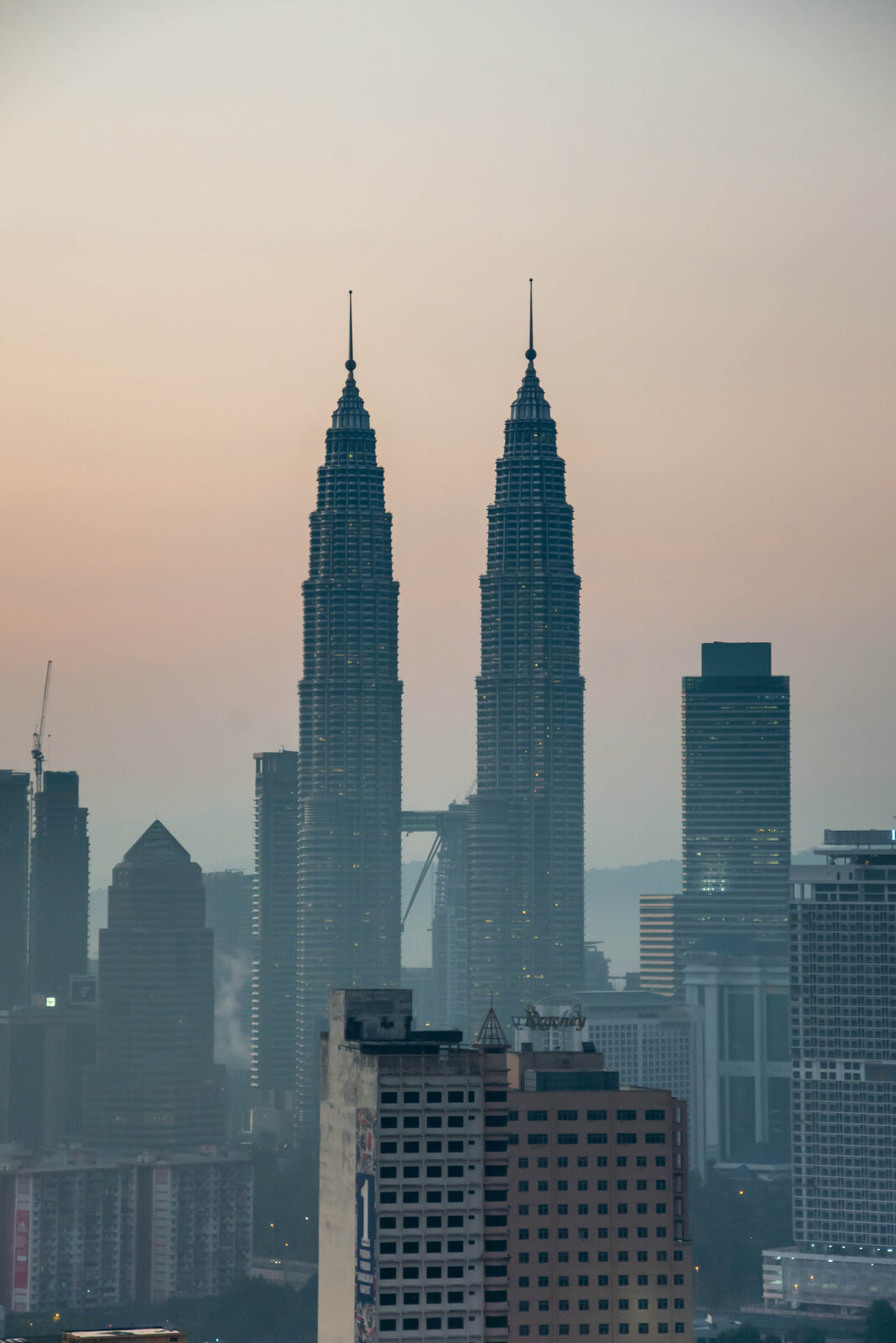
The story of the Petronas Twin Towers begins not with blueprints or excavation, but with the transformative vision of one man: Prime Minister Dr. Mahathir Mohamad. In the late 1980s, as Malaysia's economy surged with double-digit growth rates, Dr. Mahathir envisioned a building that would announce Malaysia's arrival on the world stage — a structure so bold and magnificent that it would redefine the country's identity in the eyes of the global community.
At the time, Malaysia was rapidly transitioning from an agriculture-based economy to one driven by manufacturing and technology. The country needed a symbol that reflected this metamorphosis. Petronas, Malaysia's national petroleum corporation and one of its most profitable enterprises, was selected to commission and anchor this landmark project. The decision was strategic: the towers would serve as Petronas's global headquarters while simultaneously embodying the nation's economic vitality and cultural heritage.
The Design Competition
In 1991, an international architectural competition was launched to find the perfect design for what would become Kuala Lumpur's defining landmark. Eight of the world's most prestigious architectural firms were invited to submit proposals. The brief was extraordinary: create the tallest building in the world, one that would be unmistakably Malaysian in character while meeting the highest international standards of commercial office space.
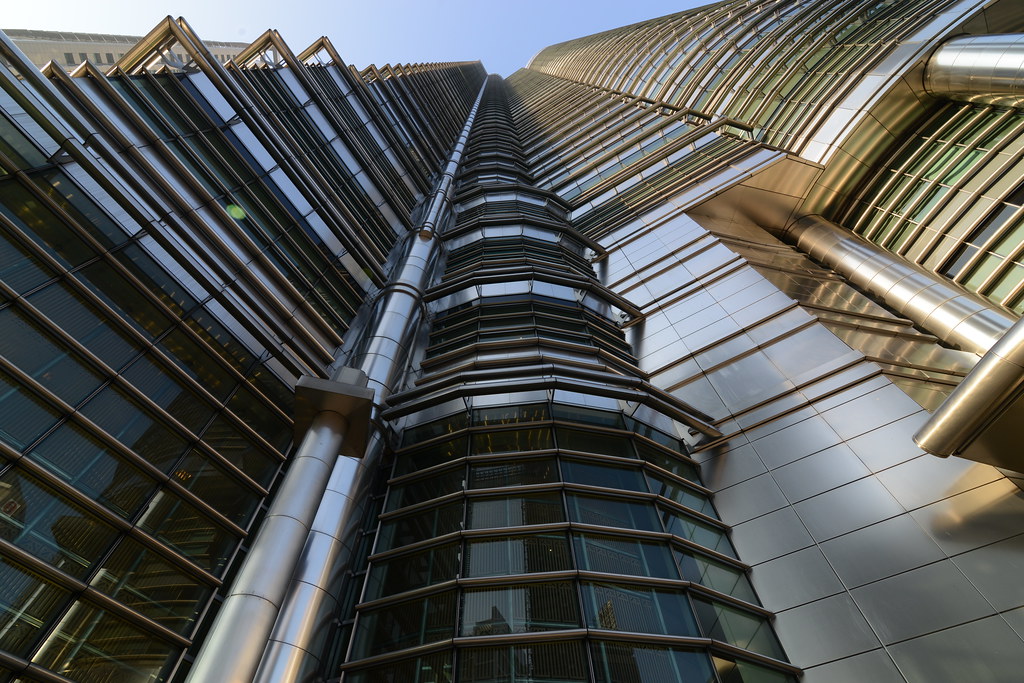
The competition drew remarkable entries, but it was the submission by Argentine-American architect César Pelli that captured the imagination of the selection committee. Pelli's design was revolutionary — instead of a single tower, he proposed twin towers connected by a skybridge, their floor plates based on Islamic geometric principles. The eight-pointed star motif, derived from the Rub el Hizb, resonated deeply with Malaysia's Islamic cultural identity while projecting a thoroughly modern aesthetic.
Pelli's firm, Cesar Pelli & Associates (now Pelli Clarke & Partners), was officially appointed as the lead architect, with Adamson Associates serving as the executive architect and the Malaysian firm RSP Architects as local associate.
Breaking Ground: 1992–1993
Planning commenced on January 1, 1992, with the site selected at the former Selangor Turf Club racecourse in the heart of Kuala Lumpur. This location was significant — it represented the transformation of colonial-era leisure grounds into a symbol of modern Malaysia.
However, the site presented immediate challenges. Geotechnical surveys revealed that the original foundation location sat on the edge of a buried limestone cliff, with half the site resting on decayed limestone and the other half on softer Kenny Hill formation rock. Building the world's tallest towers on such unstable ground was deemed too risky. In a decisive move, the entire building footprint was shifted 61 metres southeast to place both towers entirely on the more stable soft rock formation.
Excavation began on March 1, 1993, an undertaking of staggering proportions. Workers dug 30 metres below the surface, removing approximately 500 truckloads of earth each night. The excavation pit was one of the largest ever created for a building project at that time.
The World's Deepest Foundations
The foundation work that followed set new records in civil engineering. Because bedrock lay far below the surface, the engineering team designed what were then the world's deepest foundations for any building. A total of 104 concrete piles per tower were bored to depths ranging from 60 to 114 metres — some reaching nearly 375 feet underground. French engineering firm Bachy Soletanche undertook this critical work, completing it within an impressive 12-month timeframe.
Crowning the pile system was a massive concrete raft foundation for each tower, measuring 4.6 metres thick and weighing 32,500 tonnes. The pouring of each raft required a continuous operation lasting 54 hours, consuming 13,200 cubic metres of concrete — at the time, the largest single concrete pour ever attempted for a building foundation.
The Race: Two Towers, Two Teams
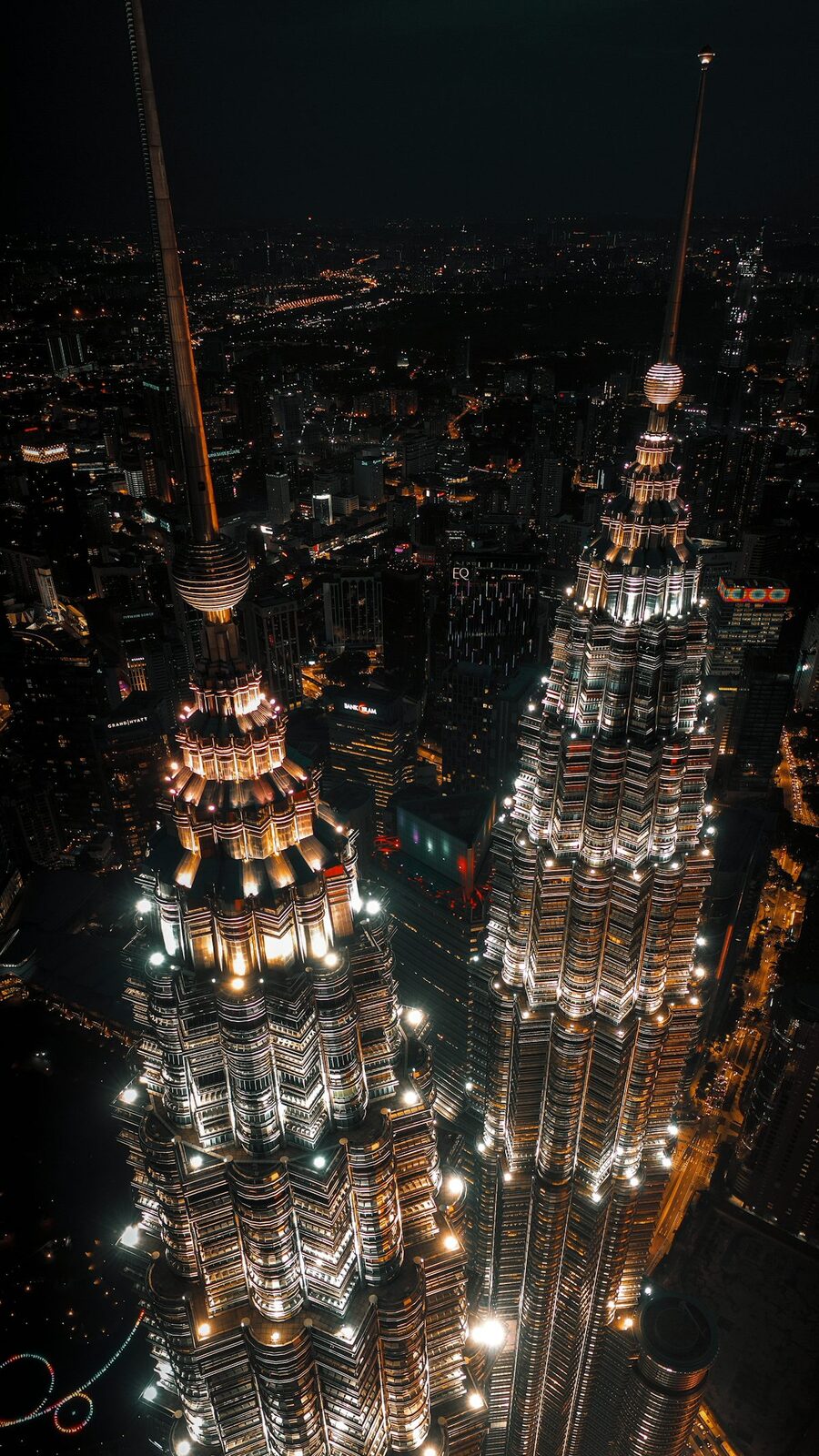
To meet the demanding six-year completion deadline, the Malaysian government made an unconventional decision: two separate international construction consortia would build the towers simultaneously. Tower 1 was assigned to a Japanese consortium led by Hazama Corporation, while Tower 2 went to a South Korean consortium led by Samsung C&T Corporation.
What followed was an unofficial but intense competition between the two teams, fueled by national pride and professional rivalry. The Samsung-led team, despite starting a month behind, ultimately completed Tower 2 first. This competitive dynamic pushed both teams to innovate and accelerate, with construction proceeding around the clock during critical phases. Delays were extraordinarily costly, estimated at approximately $700,000 per day.
Rising to Record Heights: 1994–1996
Construction of the superstructure began on April 1, 1994. The towers rose at an impressive rate, with each floor taking approximately four to five days to complete. Unlike most Western skyscrapers, which use steel frames, the Petronas Towers were constructed primarily from high-strength reinforced concrete — a material twice as effective as steel in reducing building sway, though it made the structures significantly heavier.
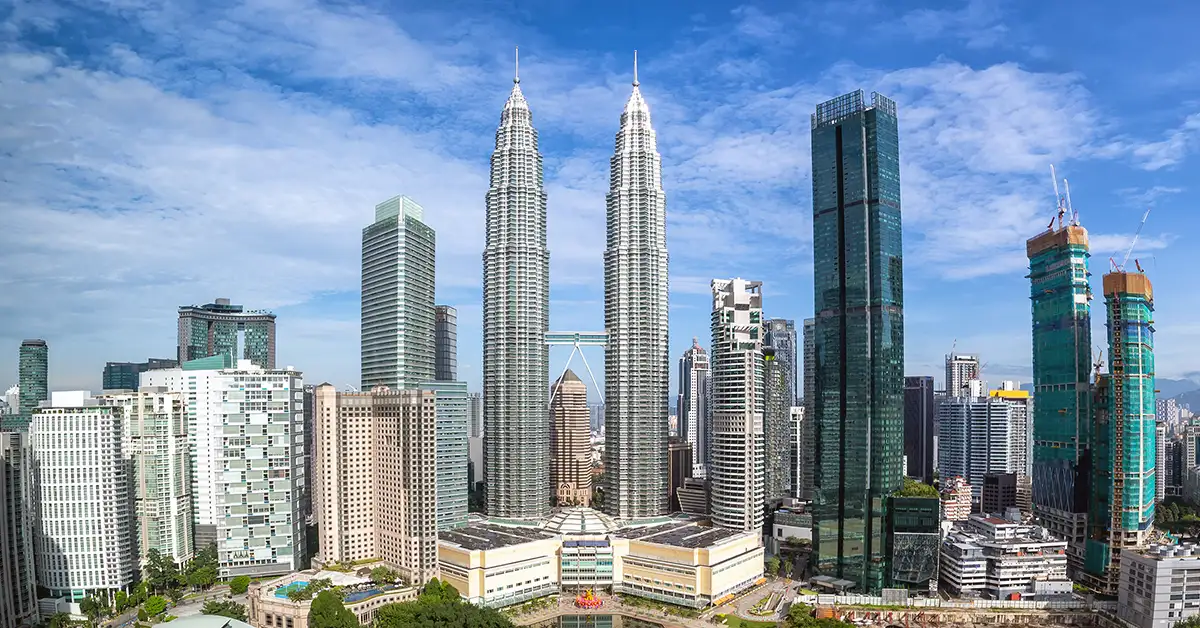
The original design called for towers of 427 metres, but architects and engineers pushed for additional height. The addition of distinctive dome-shaped pinnacles atop each tower brought the final height to 451.9 metres (1,483 feet), surpassing Chicago's Sears Tower to claim the title of world's tallest building.
Interiors were completed by January 1996, and the iconic spires were installed by March 1996. The overall construction was declared complete in June 1996, at a total cost of approximately US$1.6 billion.
Inauguration and World Records
The first Petronas employees moved into the towers on January 1, 1997. However, the official inauguration was deliberately timed for maximum symbolic impact. On August 31, 1999 — Malaysia's 42nd Independence Day — Prime Minister Mahathir Mohamad officially opened the Petronas Twin Towers to the world.
The towers claimed the title of world's tallest buildings in 1998 and held it until 2004, when they were surpassed by Taipei 101. To this day, they remain the world's tallest twin skyscrapers — a record that no other building has challenged.
Legacy and Recognition
In 2004, the Petronas Twin Towers received the prestigious Aga Khan Award for Architecture, recognizing their exceptional contribution to Islamic architectural heritage in a contemporary context. The towers have appeared in numerous films, documentaries, and publications, becoming one of the most photographed buildings in the world.
The towers were Malaysia's tallest building until 2023, when Merdeka 118 surpassed them. However, their cultural significance remains undiminished. For millions of Malaysians and visitors worldwide, the Petronas Twin Towers are more than an office building — they are a symbol of what a nation can achieve when vision, culture, and engineering come together in perfect harmony.
Quick Facts: Petronas Twin Towers
Related Articles
Islamic Geometry in the Design
The Contractors' Race