An Unconventional Strategy
When the Malaysian government decided to build the world's tallest towers, they faced a fundamental challenge: how to complete a project of unprecedented scale and complexity within a six-year deadline. The solution they devised was as bold as the towers themselves — hire two separate international construction consortia and assign one tower to each.
This was virtually unprecedented in the construction industry. Major building projects are almost always assigned to a single contractor or consortium, which manages the entire construction process from start to finish. The decision to split the Petronas project between two teams was a calculated gamble designed to accelerate construction through competition while providing insurance against the risk of a single contractor failing to deliver.
The Two Teams
Tower 1 (the western tower) was assigned to a Japanese consortium led by Hazama Corporation, one of Japan's oldest and most respected construction companies. The consortium also included JA Jones Construction Co. (an American firm), MMC Engineering Services Sdn Bhd (Malaysian), and Mitsubishi Corporation. Japan's reputation for precision engineering and meticulous quality control made the Hazama consortium a natural choice for such a demanding project.
Tower 2 (the eastern tower) was awarded to a South Korean consortium led by Samsung C&T Corporation, the construction arm of the Samsung conglomerate. The consortium included Kukdong Engineering & Construction (which would later also build the skybridge) and Syarikat Jasatera Sdn Bhd (Malaysian). Samsung C&T was eager to establish itself as a major player in international construction, and the Petronas project represented an ideal opportunity.
The Race Begins
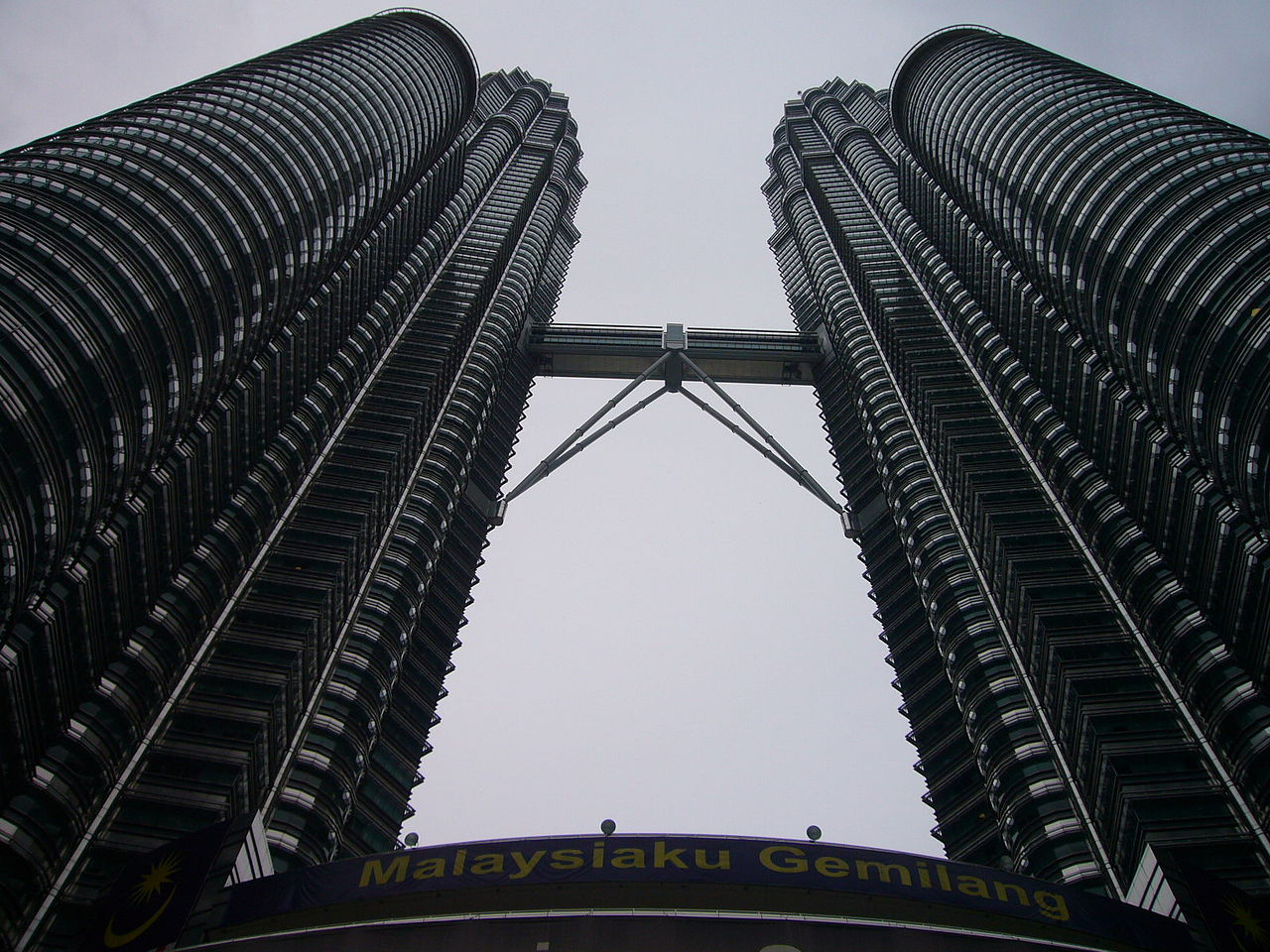
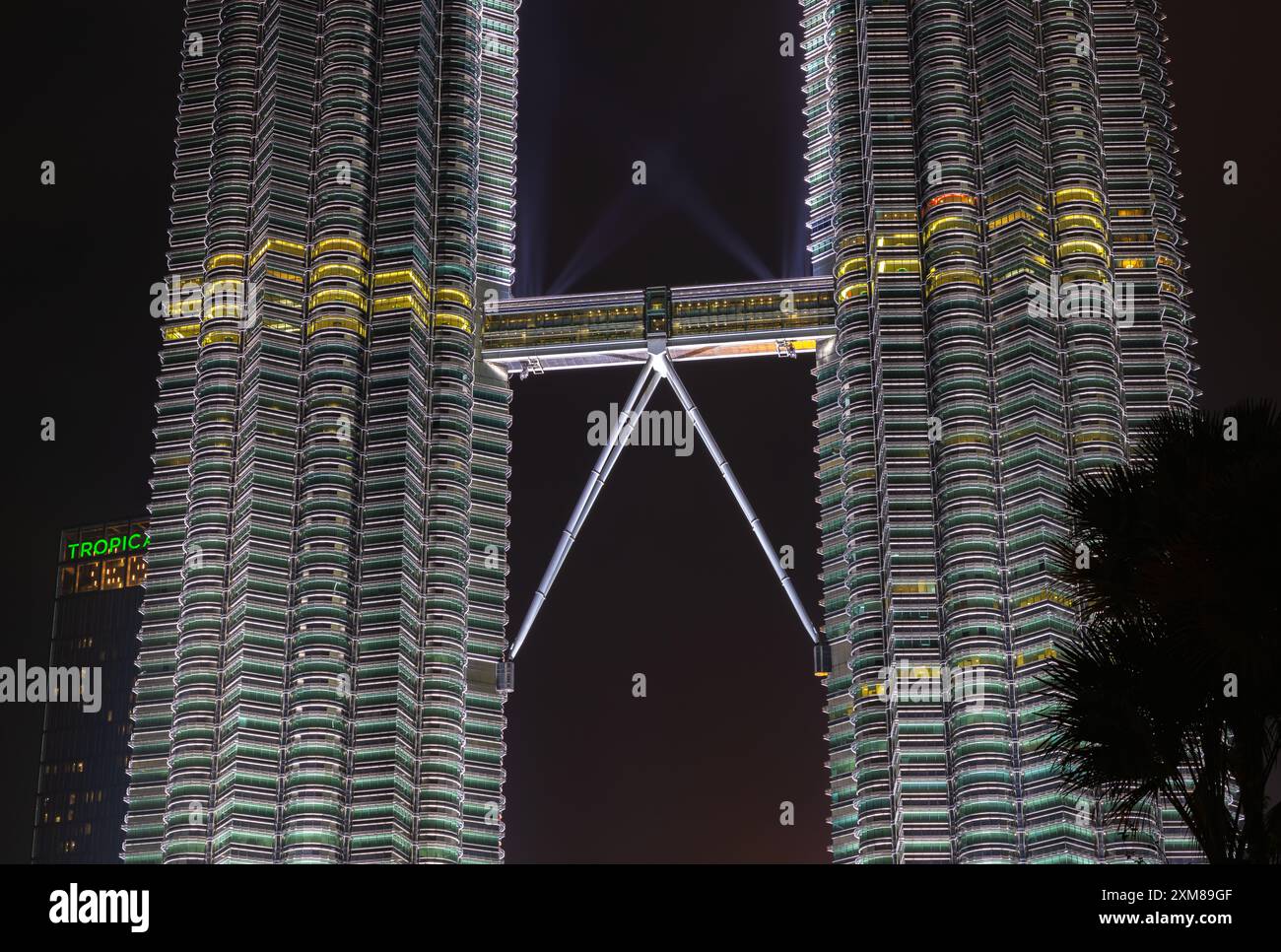
What followed was one of the most remarkable competitive dynamics in construction history. Although the project was not officially framed as a race, the physical proximity of the two towers — separated by only 44.2 metres at ground level — meant that each team could see their rival's progress in real time. Workers on one tower could look across the gap and measure their performance against the other team's daily achievements.
This visibility created intense but productive rivalry. Both teams extended their working hours, optimised their construction sequences, and pushed their supply chains to deliver materials faster. The competitive spirit was fuelled by national pride — Japanese and South Korean construction workers each wanted to demonstrate that their country's building prowess was superior.
Samsung's Comeback
The Samsung-led consortium began work on Tower 2 approximately one month after the Hazama team started Tower 1. Despite this late start, Samsung's team gradually closed the gap through aggressive scheduling and innovative construction techniques. In the end, Samsung completed Tower 2 before Hazama finished Tower 1 — a result that generated considerable pride among the South Korean builders and media.
The precise reasons for Samsung's faster pace are debated. Some attribute it to more efficient construction methods; others point to the larger workforce Samsung deployed. Regardless of the cause, the outcome demonstrated the effectiveness of the dual-contractor strategy: competition had driven both teams to perform at levels that might not have been achieved by a single contractor working alone.
The Cost of Delays
The competitive pressure was intensified by the extraordinary cost of construction delays. With the combined project budget approaching US$1.6 billion and the Malaysian government's deadline firmly in place, delays were estimated to cost approximately $700,000 per day. This financial pressure ensured that both teams maintained relentless focus on schedule performance.
One notable incident illustrated the stakes involved. During construction, a batch of concrete used in one of the towers failed a routine strength test. Work on that tower was immediately halted while the issue was investigated and resolved. The cost of this single quality failure ran into millions of dollars. To prevent recurrence, three separate concrete batching plants were established on-site, ensuring a continuous and quality-controlled supply of the high-strength concrete that was critical to the towers' structural integrity.
Legacy of Competition
The dual-contractor strategy employed on the Petronas Twin Towers has been studied by construction management researchers and practitioners worldwide. While the approach requires careful coordination — both teams must work from identical architectural and engineering documents, and their work must ultimately join seamlessly at the skybridge and shared podium — the competitive benefits can be substantial.
The Petronas experience demonstrated that managed competition could accelerate complex construction projects without compromising quality. It also showed that international collaboration, even between historical rivals, could produce extraordinary results when channelled toward a shared goal. The towers themselves stand as permanent proof of what two teams, driven by pride and excellence, can achieve.