Pushing the Boundaries
The construction of the Petronas Twin Towers required engineering innovations across multiple disciplines. From foundation design to structural systems, from facade engineering to building management, the project pushed the state of the art in virtually every area of tall building technology. Many of the techniques developed during the project have since become standard practice in supertall building construction worldwide.
High-Strength Concrete Revolution
Perhaps the most significant engineering decision was the use of high-strength reinforced concrete as the primary structural material. At the time, most supertall buildings in the West were constructed using steel frames. The choice of concrete for the Petronas Towers was driven by multiple factors: concrete's superior performance in wind sway reduction (approximately twice as effective as steel), its lower cost compared to imported steel, and the familiarity of Asian construction workers with concrete techniques.
The concrete used in the towers was specially formulated to achieve compressive strengths of up to 80 megapascals (MPa) — significantly higher than the 20–40 MPa typically used in conventional construction. Developing and quality-controlling this high-strength concrete mix required extensive research and testing, resulting in advances that benefited the broader construction industry.
Tube-in-Tube Structural System
The towers employ a tube-in-tube structural system, a concept originally developed by structural engineering legend Fazlur Rahman Khan. This system consists of a central concrete core (the inner tube) surrounded by an outer ring of widely spaced super columns connected by ring beams (the outer tube). The space between the inner and outer tubes is column-free, providing flexible office layouts.
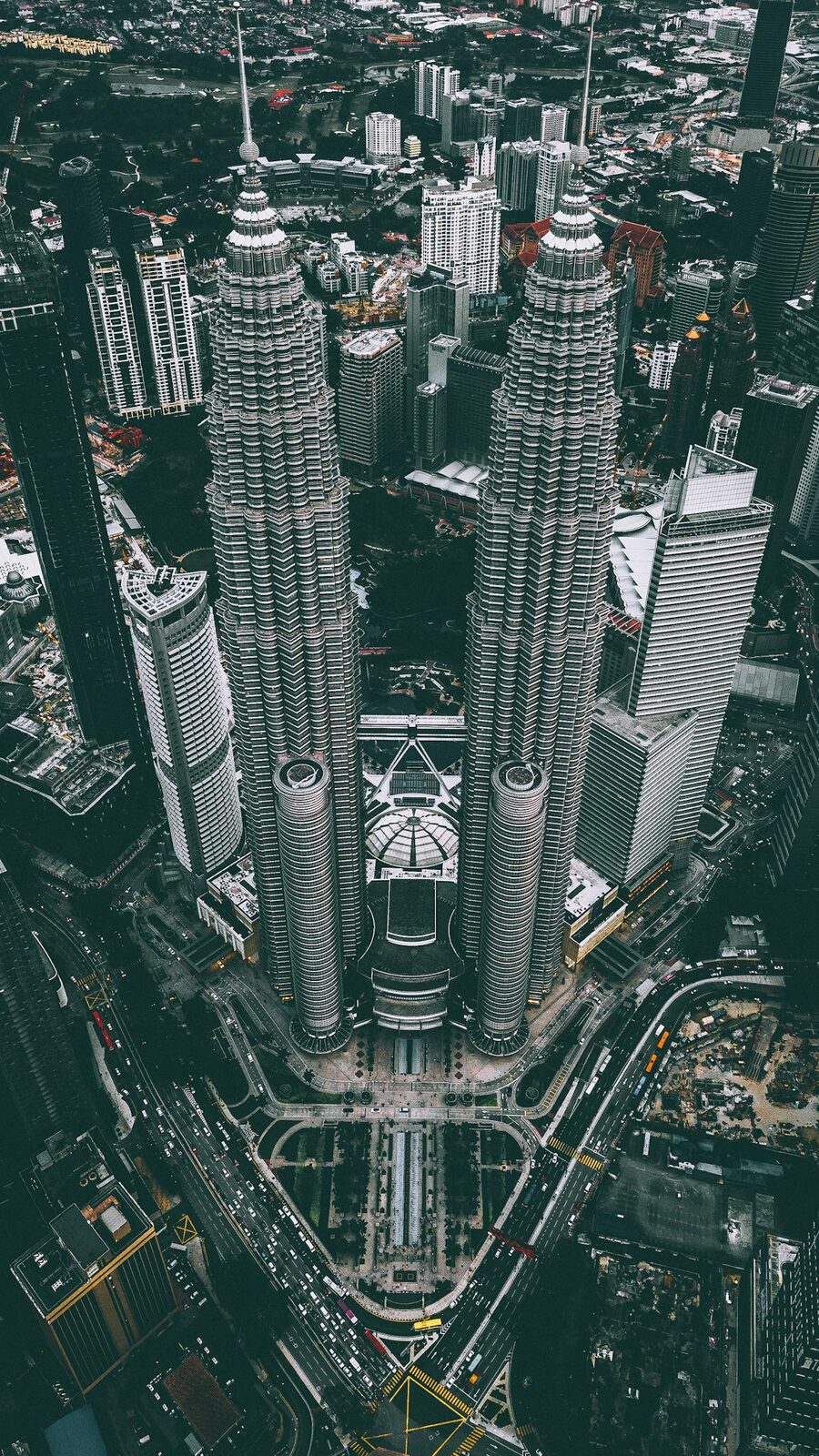
For the Petronas Towers, this system was adapted to work with the eight-pointed star floor plan — a geometric challenge that required careful analysis to ensure efficient load transfer paths. The 23-by-23-metre concrete core at each tower's centre houses elevators, stairs, and mechanical systems, while 16 super columns around the perimeter provide lateral stability.
Wind Engineering
At 451.9 metres, the towers are significantly affected by wind forces. Extensive wind tunnel testing was conducted using scale models to understand how the towers would behave under various wind conditions, including Malaysia's monsoon storms. The tests revealed that the twin-tower configuration created complex aerodynamic interactions, with vortices shed by one tower affecting the other.
These findings influenced the structural design, leading to additional stiffening in critical areas and the development of sophisticated damping strategies. The use of high-strength concrete, with its superior damping characteristics compared to steel, was itself a wind engineering innovation that helped control building accelerations to levels comfortable for occupants.
Intelligent Building Systems
The Petronas Towers were among the first buildings to be designed as truly "intelligent" structures. An integrated building management system coordinates all major building functions: telecommunications, environmental control (HVAC), power supply, lighting, fire and smoke detection, and security systems.
The system monitors thousands of sensors throughout the building, automatically adjusting systems to optimise comfort, safety, and energy efficiency. This level of integration was pioneering in the mid-1990s and anticipated the "smart building" concepts that would become mainstream in the following decades.
Elevator Technology
Moving people efficiently through 88 floors requires sophisticated elevator engineering. The towers contain 78 elevators, including 29 double-decker units that serve two floors simultaneously. The double-decker configuration effectively doubles elevator capacity without requiring additional shaft space — a critical consideration in a building where every square metre of floor area is valuable.
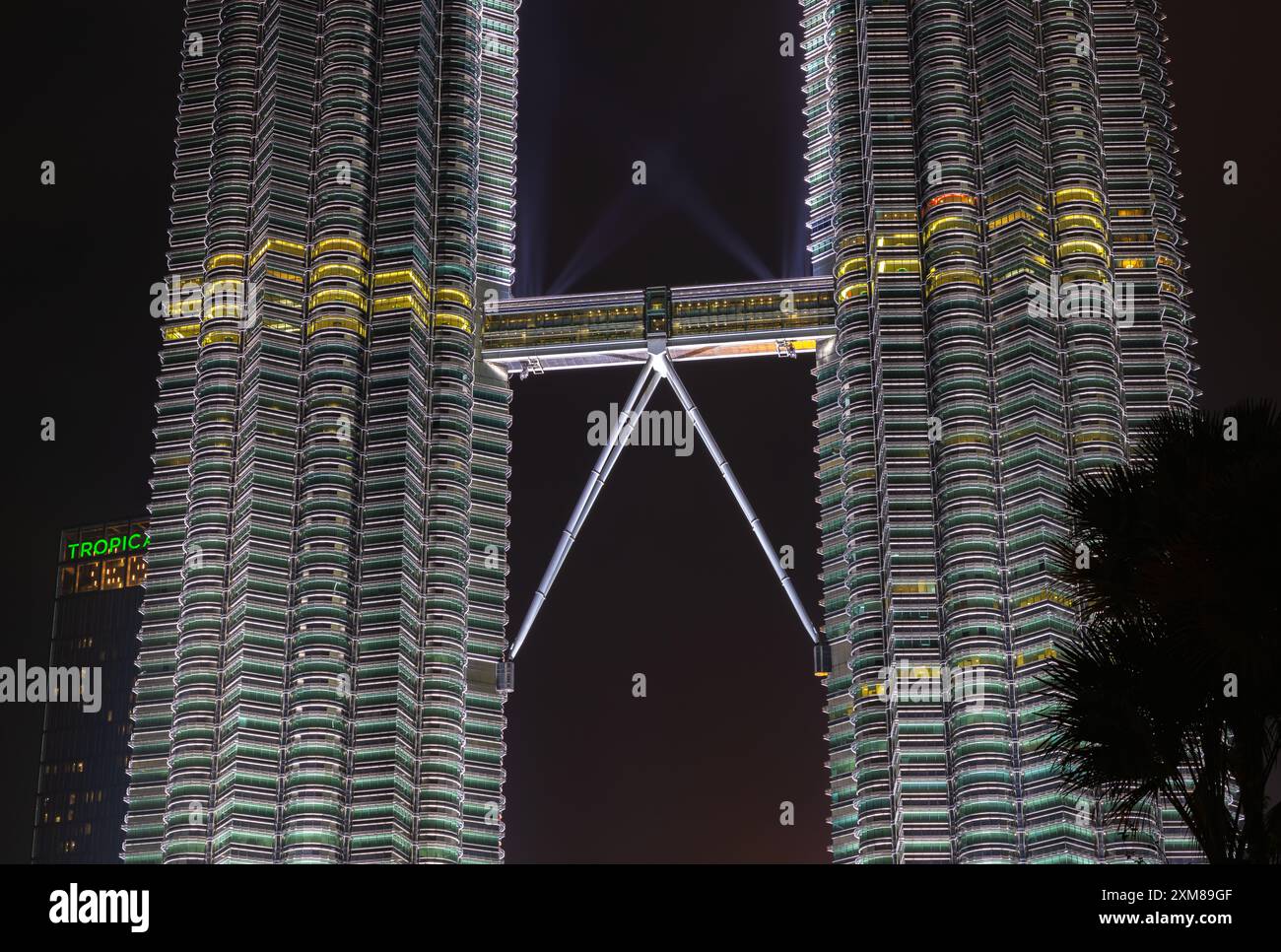
The elevator system uses a zoned approach, with express elevators serving sky lobbies where passengers transfer to local elevators for their destination floors. This system, borrowed from earlier supertall buildings, was refined for the Petronas Towers to handle the complex traffic patterns created by the twin-tower configuration and skybridge connections.