The Rub el Hizb: Foundation of Form
At the heart of the Petronas Twin Towers' design lies an ancient Islamic geometric form: the Rub el Hizb. This eight-pointed star, created by overlapping two squares rotated 45 degrees, has been a fundamental motif in Islamic art and architecture for centuries. It appears in mosque decorations, manuscript illuminations, and textiles across the Muslim world, representing principles of unity, harmony, stability, and rationality.
César Pelli selected this form as the floor plate for each tower, creating a building whose cross-section would be immediately recognizable as rooted in Islamic tradition. The eight-pointed star provides eight lobes, each offering panoramic views and generous office space. Between the points of the star, circular arc segments were added to increase the usable floor area while softening the profile — Pelli described this process as "scalloping" the points to achieve a more elegant and delicate aesthetic.
Postmodern Islamic Architecture
The Petronas Twin Towers represent a masterful synthesis of postmodern architectural theory and Islamic design principles. Postmodernism in architecture, which emerged in the 1960s and 1970s, rejected the stark minimalism of the International Style in favour of buildings that communicated meaning through historical references, cultural symbols, and decorative elements.
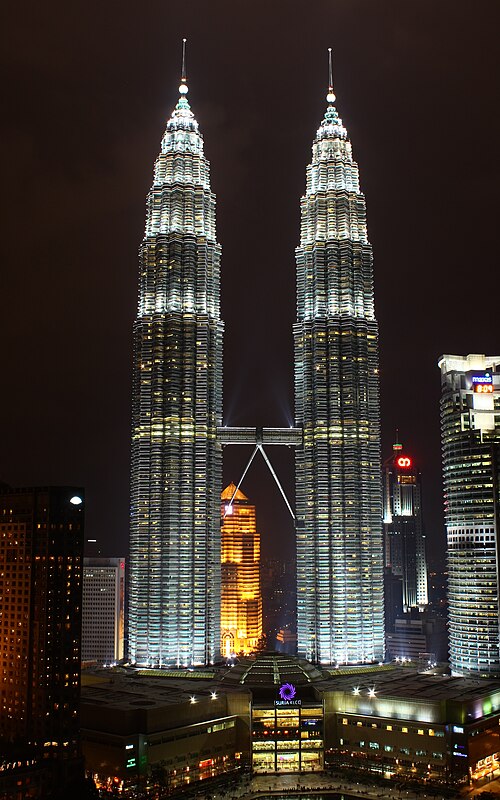
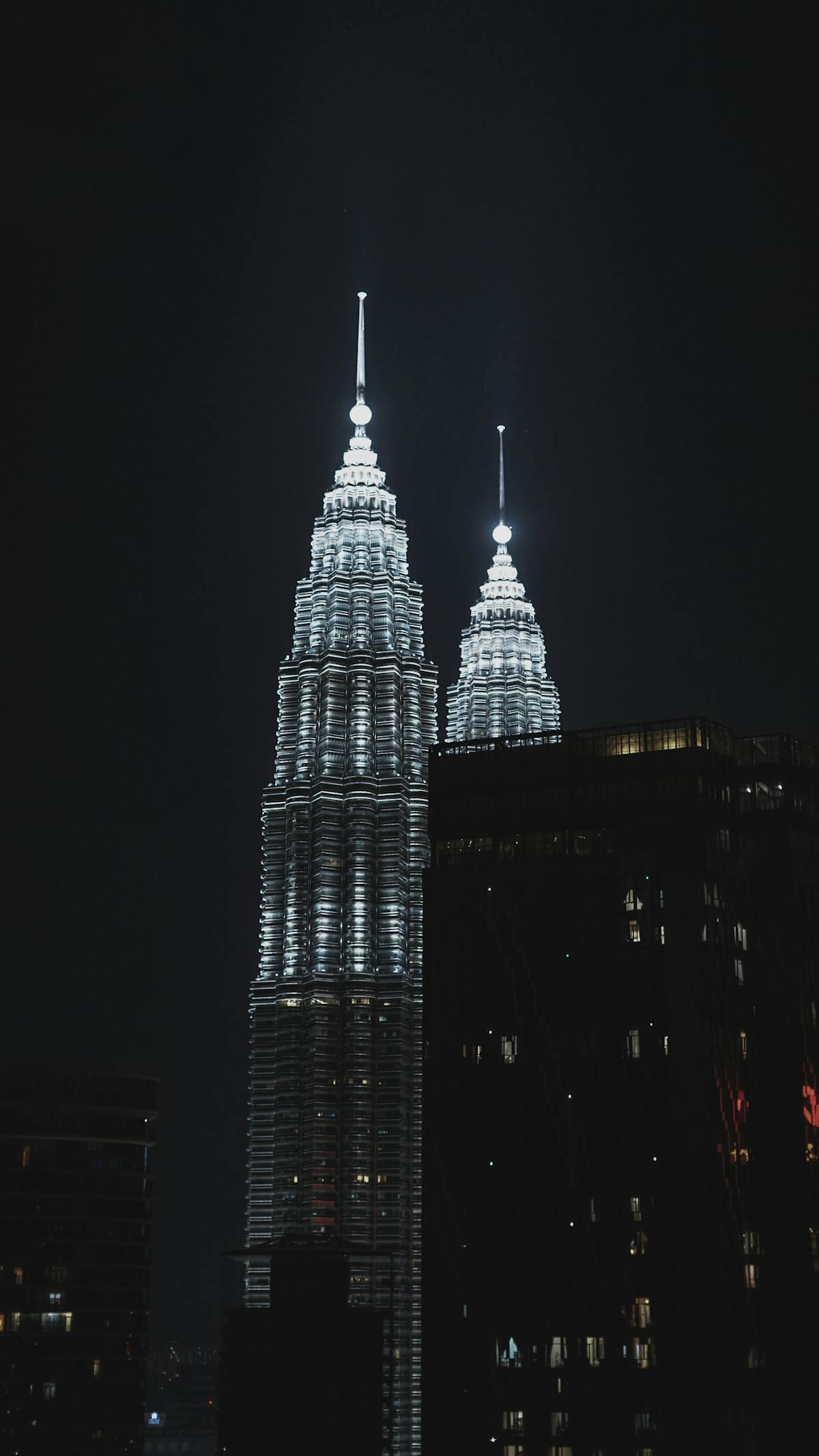
Pelli embraced this philosophy fully. Every aspect of the towers' design carries cultural significance. The setbacks as the towers rise create a stepped profile reminiscent of traditional Islamic minarets. The pinnacles atop each tower echo the domes of mosques. Even the number of floors — 88 — carries numerological significance in Chinese culture (prosperity), acknowledging Malaysia's diverse ethnic makeup.
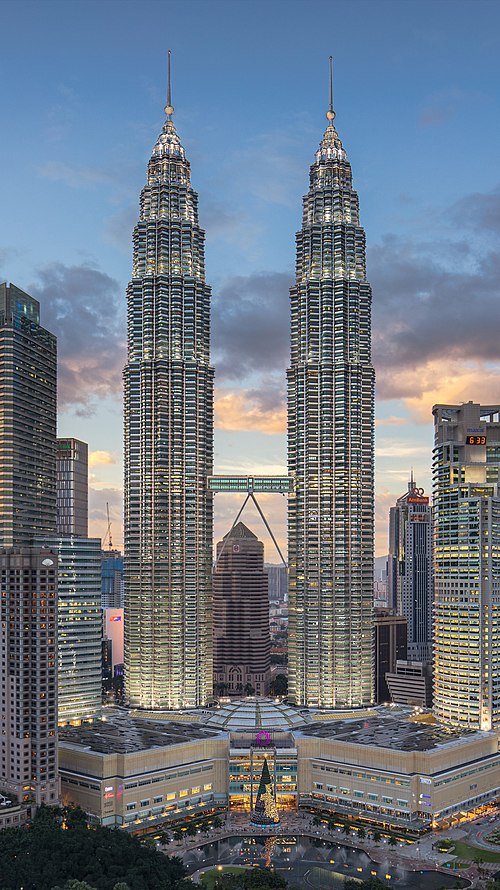
The towers' proportions were carefully calibrated to convey both power and grace. The base is massive and grounded, conveying stability and permanence. As the towers rise, they taper gradually, creating an impression of elegant aspiration. The culmination in slender steel pinnacles gives the buildings a sense of reaching toward the heavens — a quality that resonates with both Islamic and universal spiritual traditions.
The Facade: Steel, Glass, and Islamic Art
The exterior skin of each tower consists of approximately 33,000 stainless steel panels and 55,000 glass panels. These materials were chosen for both practical and aesthetic reasons. The stainless steel provides durability and a distinctive silvery sheen that changes character throughout the day, from cool grey in the morning to warm gold in the sunset. The glass panels are designed to maximize natural light penetration while minimizing solar heat gain — essential in Malaysia's tropical climate.
The facade's pattern is not random; it deliberately evokes the geometric interlocking patterns found in traditional Islamic tile work. Viewed from the ground, the towers' surfaces shimmer with a rhythmic pattern that recalls the mathematical precision of Islamic art. This decorative quality sets the Petronas Towers apart from the glass-box skyscrapers that dominate most city skylines.
Interior Design: Malaysian Craft Traditions
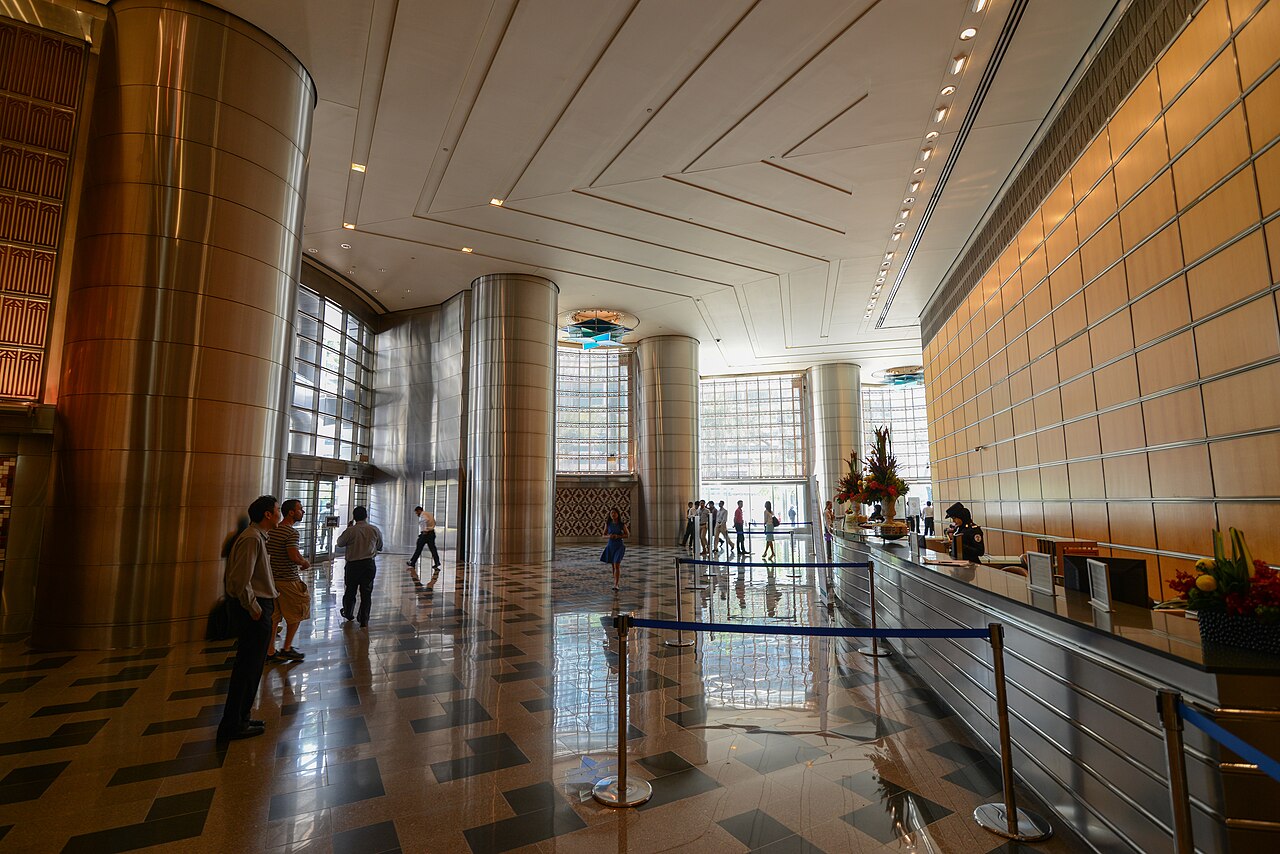
The Islamic design theme continues inside the towers, particularly in the public spaces. The main lobbies feature elaborate floor patterns based on traditional songket weaving — a textile art form practiced by Malay artisans for centuries. The use of songket motifs connects the building's interior to Malaysian craft heritage, creating a warmth and cultural specificity that contrasts with the sterile lobbies of many commercial towers.
Walls and ceilings incorporate geometric patterns derived from Islamic tilework, executed in modern materials including stainless steel, marble, and specially commissioned art glass. The effect is of a building that honours tradition while celebrating the possibilities of contemporary materials and construction techniques.
The Skybridge as Design Element
The double-decker skybridge connecting the towers at levels 41 and 42 is not merely a functional element — it is a crucial part of the architectural composition. Pelli designed the bridge to visually unite the two towers, creating the impression of a single integrated structure rather than two separate buildings standing side by side.
Positioned at roughly one-third of the towers' height, the skybridge creates a dramatic horizontal counterpoint to the relentless verticality of the towers themselves. It frames the sky between the buildings, creating a gateway effect that is visible from great distances and has become one of the most recognizable architectural silhouettes in the world.
Sustainability Before Its Time
Although the Petronas Towers were designed before sustainability became a mainstream architectural concern, they incorporate several features that would later be recognized as environmentally responsible. The high-performance glass facade reduces cooling loads by limiting solar heat gain. The building's intelligent management system optimizes energy use across all building systems. Rainwater harvesting systems reduce the demand for municipal water supplies.
The towers earned recognition from the Green Building Index, Malaysia's green building certification program, and received the Aga Khan Award for Architecture in 2004 — one of the most prestigious honours in architecture, recognizing buildings that serve the needs of societies where Muslims have a significant presence.